Tuesday, April 16, 2013

Boston Marathon Bombing: Thoughts on Preparation


It is just one day after the Boston marathon bombing which has tragically killed 3 and injured 176 people who did not deserve such violence thrust upon them. Such attacks are reprehensible. While it is too early to speculate on the perpetrator(s) there are some thoughts that I would like to share that may help you prepare for future events.

There are numerous and conflicting reports that cell phone service was shut down by law enforcement to prevent remote detonation of an improvised explosive device (IED). Other reports indicate that cell phone service was not cut and that lines were busy due to extensive usage during the incident. Regardless of how the phone service was interrupted the lesson here is not to rely on certain technology during an incident or crisis. Too many people rely on cellular phone technology during a crisis as a method to contact help and loved ones. They believe that they will be able to call, text, or email from their phone at a moment’s notice. In many cases text messages will go through when your call may not. It will also help free up more "space" for emergency communications on the telephone network. But, when such technology fails most people do not have a backup plan. Imagine if you were at the Boston marathon with your 13 year old child who has a cell phone. You assume that if something goes wrong you will be able to call her to find out where she is at and then meet up at a designated location. But, if you can’t reach her panic may set in for you as a parent and for your child who does not know what to do or how to respond. This is not a good situation.  No one benefits from panic! In such a case it is important to have a contingency plan that will allow for communication.  Such a plan can be extravagant and costly or very simple and basic. It depends on how much you want to spend and how elaborate you want to be.  Other forms of communication to consider are:

Satellite Phone – Yes, satellite phones are expensive but they are also very reliable when other forms of technology may fail.

Two way radio – Very basic but can also be effective especially when distance is not an issue. Two way radios are also very cost effective. The Family Radio Service ( FRS) has utility for short range communications, as long as you understand its very significant limitations. The FCC created FRS as an unlicensed service for use by families. Each member of your family can have a two way radio with back up frequencies to use should your primary choice not work. Make sure batteries are fresh and that each person has extra batteries if possible.

Whistle – Very primitive form of communication but can be effective depending on the situation. During a crisis there may be a lot of loud noise from sirens, injured people screaming, bystanders yelling for loved ones, first responders moving crowds, active property destruction, etc. Yet, use of a whistle is much more effective than yelling. Work out a unique pattern that you and your family can recognize. It may or may not work but it is one option to consider.

Marker – Another low tech method is to use a thick permanent marker to write information that may be spotted by a loved one.  For example, using the previous scenario say your daughter is found by police at the restroom and taken to a safe area. Your daughter can write a message on the bathroom door (your last known location) stating that you are safe and with the police. With the help of the police officer she can provide the exact location for you to meet her. This may or may not work but it is another option. Remember, options are good to have.

While technically not a form of communication it is good to have designated meeting locations with contingency back up.  Show your family members where to meet up should you become separated or a crisis occurs. If the scene is completely chaotic or still active and dangerous you may want to consider having a rendezvous point away from the initial location that is easy to find, far enough away to be safe (relatively safe), and when possible public. If your children are young and you become separated have them go to someone in uniform such as a police officer, firefighter, or paramedic.

I am specifically leaving out the use of a Ham radio due to the licensing requirement and because most families will not have a license or carry such radios.

Another area of consideration is medical equipment.  Many of the injured at the Boston marathon suffered serious injuries to extremities to include amputations and severe hemorrhaging.  Having first aid gear can literally be the difference between life and death.  Items to consider in your first aid kit include the following:

Gloves – Never underestimate the importance of gloves to protect yourself from acquiring a potentially deadly Bloodborne pathogen such as HIV/AID or hepatitis.  I prefer to use Black Talon Nitrile gloves. It would be devastating to you and your family if you survived the initial attack yet died years later from failure to wear inexpensive yet highly effective gloves.

Tourniquet – Yesterdays double explosion exemplifies the importance of a tourniquet even in an urban environment. Yes, you can improvise a tourniquet with a belt or clothing but nothing is more easy or effective than a commercially available product. The tourniquet that I use and prefer is the Combat Application Tourniquet (CAT) which has proven to save lives on the battlefields of Iraq and Afghanistan. 

Hemostatic Agent – These are extremely effective in stopping severe hemorrhaging when used in conjunction with a pressure dressing and direct pressure. I prefer Combat Gauze as my first choice of a hemostatic agent.

Pressure Dressing – Use of a pressure dressing is also effective to help stop bleeding. There are many quality dressings available on the market. I prefer either North American Rescue’s Emergency Trauma Dressing (ETD) followed by the Israeli Bandage. Both products are excellent.

I realize that money, weight, size, and training can be a factor in what you carry. Like I stated, options are good - especially during an emergency.  It is important to analyze all crises’ that occur to see how you can more effectively plan your gear and respond if necessary.  I sincerely hope that you and your family never encounter such acts of violence. But should you, I want you to be well prepared not just to survive but to prevail.

Our thoughts and prayers are with those who have lost loved ones and those who are injured. May we remain strong and vigilant during this difficult time. We are with you Boston.

God Bless America.

//TC

©Copyright

Monday, April 15, 2013

Limited Ammunition Availability Strategies


As most of us know, the ammunition to feed our firearms has been getting harder and harder to come by. When we do find it, we often find that it’s more expensive than we are used to paying. It is certain that the laws of supply and demand are not in our favor when it comes to pricing. Like most others I have bit of a supply on hand, but I don’t feel that I have enough to do the practicing that I am accustomed to. I hope to return again to the days where I could diligently practice with a few hundred rounds each weekend, and give little thought about it. I thought I would write about some ways I have adjusted to the current environment and throw some ideas out there on how to keep our skills sharp with limited supplies of ammunition.

Dry Fire Practice- This is something I feel each dedicated shooter should be doing regardless of supply issues. My scores in classes, local IDPA matches, and qualifications at work have always seemed directly related to the amount of dry fire sessions I complete. I firmly believe that this is where my skills are improved and maintained, and I use live fire at the range to confirm that my dry practice is on track. I won’t spend any time on writing lists of drills here but wanted to touch on how I create them. I like to check class notes for drills I completed in the class and courses of fire from past matches. What did I feel I could have improved on at the time? I could probably stand some improvement in the same areas today. What did I feel were my strengths? I could probably work on making my secondary hand just as strong in that area. Is my draw, and trigger pull as smooth with my left as with my right? If not, I have something to work on. Since I operate a number of different weapon systems there is plenty to practice.

Manipulations- Closely related to dry fire practice with a bit of a twist. I see so many people on the range who shoot great once the sights are lined up on target. It’s getting them there that seem to be the problem for some. Replacing magazines, clearing malfunctions, operating with lighting tools, transitioning from rifle to pistol, hand to hand, or shoulder to shoulder, all seem to be a common point of weakness for many shooters. Single hand manipulations while intellectually understood by many, are actually practiced by very few on a regular basis. So rather than sit at home pouting about not having any ammo to shoot, I take that time and work on some of the skills so easily neglected.

Maintenance- It’s not an uncommon occurrence for me to come across a poorly maintained weapon. The last time I checked however, cleaning solvents, brushes, patches, and lubrication products were still in plentiful supply at my local shops. If you’re not shooting them, they may as well be clean right? Take some time as well to learn more about your firearm. For example a typical Glock. Get a copy of the gunsmith manual and learn how to really break it down instead of a typical field stripping. Spend some time with it and soon you will know how to repair almost anything concerning it. You should learn how to clean and replace parts to the most detailed level. Think about obtaining an Army or Marine manual for the M16/AR15. Spend some time on how to really take care of your weapons. This is a great time to learn if you can’t be at the range, and you will still be improving your overall effectiveness and capability. The way legislation is going, I believe it would be wise to thoroughly learn about your weapons and how to repair them. One day firearms my be as hard to come by as ammo is. Learn to be your own mechanic.

Education- There is no reason to stop learning just because we can’t locate the 1000 rounds required for a class we have been thinking of taking. Spend a few bucks and check out some DVD’s from reputable instructors. You really can learn a great deal through alternate means such as books and DVD’s. You will likely see and learn the exact material you would have covered in class, just without the personal coaching. You can still run the drills you learned and practice them in dry fire sessions, and when you get out to the range you can reinforce those drills with your limited supply of ammunition. It’s not a perfect substitute, but will increase your knowledge base, and help keep you motivated to improve when you can’t get to the range.

Airsoft/Paintball/Conversion Kits- I had long ago purchased some conversion kits for some of my weapon systems in order to save some money when ammunition prices were rising. However I have found .22 LR ammunition to be the hardest to obtain these days and the most severely overpriced. It’s still a viable option, but just not as attractive as it used to be. Airsoft and Paintball leagues are a lot of fun and you can work on some of those skills you have learned in the past. Most likely I think you will find it is great fun, and can really build some solid skills. If there is not a league near you, consider getting together with some likeminded training partners. Work on some real life scenarios, and drills. Force on force training is one of the best training methods for real encounters, and the more the better in my opinion.

The above methods were some ways that work well to improve skills and conserve the limited supply you have. I would now like to cover a few ways that have worked for me in obtaining more ammunition to at least keep training standards up to par.

Network- One of the best resources I have found is other people. Likeminded people. I was at a local shop the other day after a shipment had just come in. Like many, shops they imposed a three box minimum of any particular product. While standing in line to make our choices, conversations sprung up with the other patrons to pass the time. Many agreements were made in order for each person to come away happy. For example, I was there to purchase as much 223 as I could get my hands on. The person next to me was interested in 9mm. Since we could each only get three boxes of each, we each bought both and traded. This allowed each of us to walk out with six boxes of our desired caliber. We also exchanged numbers so that we could do the same thing on the next shipment. In the course of talking with others, I learned some of their tips, tricks and sources. I even learned of a gun shop that had opened nearby that I was previously unaware of that had a decent supply though interacting with others.

Trade- A few times I have been at a shop and they had some ammunition but it was not in my desired caliber. In this case I was looking for some 9mm and there was none to be found. But they did for some reason get a recent shipment of 45acp. I had plenty of 45acp on hand but I purchased it anyway. It turned out to be a good thing since a friend at work was desperately looking for it, and was willing to trade any 9mm for it since he sold all his guns in that caliber. So if you see a caliber that you know is popular in your area you might consider picking it up. There is little doubt that if you are networking you will find a decent trade down the road.

Online Sources- I will not make a list of them here. Look around at online sources. You will likely see that many are sold out. Check them daily. To my surprise I often go days with nothing and then suddenly one of the suppliers has just what I need. It certainly beats driving around from shop to shop, and only takes a couple of minutes each day to check the numerous suppliers you can find online. Again, keep in mind that you can trade with those you’ve networked with so don’t just check calibers you personally need. Help your friends, and they will help you. Also if you are a hunter, consider getting a box or two of what you use. You never know what will be available when the season comes around, and your hunting partners may need some help.

I hope this gave you some good ideas on how to manage during these times of limited availability of ammunition. Hopefully things will get back on track, and we all learned some valuable lessons. Maybe we'll even meet some new friends and training partners as a result. Have hope, and keep training!!!

// EE

Friday, April 12, 2013

Imagery as a Tool for Survival Preparation


Now doesn’t “Imagery for Survival” kind of sound a little out there? May be it does but utilization of imagery is a critical, yet often neglected, skill to survival and I will explain why. Many people who plan for survival incidents tend to focus on lists to tell them what they need for a particular situation. Lists are great but do not necessarily include everything that you may need.  When planning for a potential emergency, crisis, or disaster it is critically important to really think things through and put yourself in the situation, at least mentally, before it actually occurs. One way to do this is by using the skill known as imagery. Before we get into the use of imagery I want to clear up a common misconception. Many people confuse imagery with visualization. Technically they are not the same even though they are often used interchangeably. Visualization refers to using “sight” only. An example would be Michael Jordan standing at the free throw line as he mentally watches himself through balls through the net. He is only using one of the five senses. Imagery, on the other hand, uses all five senses when relevant. The five senses include sight, hearing, taste, smell, and touch. In addition to these senses humans also have awareness of balance, pressure, temperature, pain, and motion all of which may involve the coordinated use of multiple sensory organs.  Imagery is the ability to place yourself in a situation utilizing all of your senses while performing well as a means of virtually rehearsing the scenario to improve performance. Therefore, utilization of imagery is a technique that is used as a means to improve performance. This is best accomplished once you learned the essential fundamentals of the skill you are attempting to improve. If you fail to understand how something is to be performed then the use of imagery will not benefit skill enhancement as you do not understand the basic rudiments of the skill in the first place. Again, Michael Jordan knows how to throw a free throw. Using imagery will allow him to mentally hear the crowd, feel the ball, visualize the basket, smell the arena, etc. Now let’s look at survival preparation.

There are different types of imagery but for this article I am going to keep things relatively simple. In order to use imagery to increase your survival chances in an emergency situation you need to already have an understanding of the basic skills necessary to survive. The use of imagery will allow you a virtual rehearsal in your mind using all five senses. Essentially, you are mentally practicing what you should already know. The benefit of using imagery is that many people have a diverse skillset yet never put it all together to see how each skill integrates with all other skills. Imagery will allow you to mentally go through this process and in doing so you may realize there are considerations that you failed to plan for. Utilizing imagery should be extremely detailed so that you mentally research all possible actions that you may be required to take in an emergency survival situation. Do not leave out the minutest of details. One way to practice imagery is to give yourself 20-30 minutes of uninterrupted time. Turn off cell phone, TV, radio, etc. I like to get comfortable sitting on a recliner or lying on a couch but it doesn’t really matter. Then come up with a scenario to mental rehearse from the beginning to include all actions that you will take until final resolution.

Following is a brief example:

It is 10:00PM on a quiet Thursday night. You are alone in your 3 bedroom apartment which is located on the 10th floor of an apartment complex in Los Angeles, CA. You are sitting in the living room on a recliner wearing shorts and a t-shirt as you watch the basketball scores on ESPN before you go to bed for the evening. Without warning the building begins to violently shake. You immediately realize that it is an earthquake. Within 5 seconds of the earthquake beginning all power goes out and you are completely engulfed in the dark. The weather outside is cloudy and overcast. There is no moonlight and even the outside is dark and gloomy. You immediately grab a flashlight that is the side pocket of the recliner and turn it on. The shaking is so violent that you can barely hold on to the light. You realize that you need a lanyard on the flashlight to secure around your wrist.  Approximately one minute has gone by with no relieve from the relentless shaking. You hear things all around you falling although it is still difficult to see even with the flashlight due to the continued shaking. Car alarms are going off all around you. Glass is breaking but you cannot tell from wear. The noise level is very loud. Although you have been in an earthquake before this one seems longer and much more violent. You begin to wonder if you are in the epicenter of the earthquake. You make a decision to get your bug out bag in case you feel the need to evacuate. You crawl on the floor in an attempt to reach the hallway closet that has all of your gear ready to go. You attempt to light the way with your flashlight but it is difficult due to the shaking of your building. As you are crawling on the rug you feel like you are getting cuts on your legs, stomach, and arms. It hurts but not enough to stop you. You reach the closet which is now in disarray as items have fallen off the top shelf. The shaking stops but everything is still dark because the power is out. You use your flashlight to get your bug out bag out of the closet which is buried under other items. You grab clothes that you have set aside for just an emergency along with heavy duty boots. You decide to put the clothes on. As you do you realize that you are bleeding from numerous cuts on your legs, arms, and body. Nothing life threatening that you can tell but you do need to address some of the wounds which are bleeding at a steady rate. It is now 30 seconds since the violent shaking has stopped. You mind is racing a thousand miles per hour. You have bleeding to stop, you smell gas coming from somewhere, people in your building are screaming for help, car alarms are going crazy. You mentally instruct yourself to regroup and focus on stopping your bleeding. You get out your first aid kit and attend to your wounds. You realize that it is much more difficult in the dark with only a flashlight. You bandage the wounds and put your clothes on. You grab your bug out bag and tighten the shoulder straps. All of a sudden you feel a sharp pain in the front of your right shoulder. Your packs shoulder strap is putting pressure on a shard of glass that is lodged into your skin. You take the pack off, get the piece of glass out, and put the pack on. You go to your front door with all of the gear you anticipated you would need in an emergency.

As you stand in front of the door you listen for noises outside your door and feel the door to see if it is hot. All looks good so you open the door. You use your flashlight to scan the area which has some damage on the walls and light fixtures that have come loose. With steady deliberation you head toward the staircase. You open the door and begin your journey down 10 flights of stairs. As you get to the 8th floor you see other people in the staircase going very slow because they have not flashlight and cannot see where they are going. All of a sudden your flashlight begins to dimmer. Mr. Murphy has decided to pay you a visit! In your head you think to yourself, “damn it.” But, no time to feel sorry for yourself. You take off your pack and find new batteries which are located in a special pocket on the top of your pack. In the dark you change the batteries. You continue to head down the stairs but now you have about 8 people who are following you and depending on you because you are the only person with a flashlight. As you reach the second floor you find an older gentleman on the stairs who is unconscious. You have seen him around the building but you don’t know him. You do not see any obvious signs of trauma or injury. You check for a pulse and respirations. None. You decide to keep moving to get out of the building as there is nothing you can do for this person.  You reach the first floor of the building but can’t get through the door because it will not open. You kick it, pull on it, and try to force it but it will not budge. Mr. Murphy is still by your side. You decide to go up to the second floor to get to the other stairwell. As you are moving on the second floor you hear a lady screaming that her daughter is stuck under some furniture that fell on her. You have to make a rapid decision. Do I help the girl or keep going? You decide to help the girl. You enter the apartment which is cluttered with debris all over the place. You find the girl and lift a bookcase off of her. Clearly, she has an open fracture to her right tibia and fibula. She isn’t walking out on her own. She is about 18 years old, crying and yelling because the pain is unbearable. You and another man lift her up and decide to carry her out of the building by the beam of your flashlight. As you enter the stairwell you smell a faint odor of natural gas mixed with the blood of the girls wounded leg. You think to yourself, “Murphy, go away!” You make it out of the building without further incident. Outside the building is a group of people who have also make it out. Some are yelling for help, others are lying on the ground injured, car alarms are going off, there is a smell of gas in the air, no power is on, and only a few people have flashlights. You decide to implement your evacuation plan that you have practiced before. You begin to head out on foot when all of a sudden the earth begins to shake once again. You say out loud, “Lets go Murphy, move out.” Your evacuation plan is just beginning…

This is a very brief example of your imagery session. Only you can determine the factors that will come into play. In this situation you begin to take notes and go through an informal after action review:

  • Get a lanyard on the flashlight
  • Wear a headlamp
  • Keep your first aid kit readily available
  • Keep an extra set of batteries in your pants pocket so you don’t need to get into your pack
  • Be prepared to address injuries that you receive
  • Accept Mr. Murphy as an unwanted guest

The key is to come up with situations that you may not have thought of before this imagery exercise. Remember, integrate all of your skills into the scenario to see what works, what does not work, what modifications are necessary, etc. Be as detailed as possible and plan for things to go wrong as they always do and always will.

Good luck.

//TC

© Copyright

Thursday, April 11, 2013

The Versatile EagleTac G25C2


I spent hours and hours researching flashlights. I needed one that would work in a wide variety of situations and I demanded outstanding performance. I read a lot of reviews, crunched a lot of numbers, and in the end I decided on the EagleTac G25C2 to replace one of my older model lights. My primary use for this light is for my employment, backpacking and just an overall handy light that is useful in a wide variety of situations. Here are some of the features that influenced my decision.

Power Levels- (770 Lumens/1 hr)- This light really has a great throw to it at this level. 200 yards easily. It's literally like a spotlight that can fit in your pocket. (320 Lumens/3.5hrs)- Works very nice 75-100 yards out, and very blinding in self defense roles at shorter distances. (59 Lumens/20 hrs)- Remember the Surefire Lights that were 60 lumens and lasted an hour? That's what this level gets you. A very nice bright light at 25-30 yards with 20 times longer run time!! (2 Lumens/200 hrs)- The most common level I use it at. Seems much brighter than 2 Lumens. It almost seems to be a mistake. It's a comfortable level out to 10 yards or so. Great for around camp, or when you need something along the lines of a general flashlight. It can easily light your path while walking at night, and the 200 hour run time is great.

Ease of Use- The user interface of the G25C2 is very simple. The tail cap is used to turn the light on and off. And the bezel rotates to vary the level of brightness. As you tighten the bezel it will get increasingly brighter. Loosening is the reverse and goes to the lower levels. It can also be done one handed with ease by holding the bezel between palm and little finger, and rotating the body with thumb and index finger.

Programming- This is not something that is easily done on the fly. But if you set it up right, you can just fix it and forget it. Basically, you have two options. You can keep it as I previously described with power levels of (770,320,59,2) as you rotate the bezel. Or you can have (770, 90, strobe1, strobe2). I chose the former since you can still have access to the strobe function by just double clicking the tail cap. For example, you can have the light on at 2 lumens, double click the tail cap, and it instantly blasts a 770 lumen strobe. You may also disable the double click strobe function if you prefer. The G25C2 also has a memory. This means the lighting level can be preset before you turn it on. This was one of the deciding factors for me in choosing this light. I was strongly considering the Klarus XT11 but did not like the fact that if I was using it in a lower power, it would automatically turn back on at the highest level if I turned the light off. This would mean I would have to cycle through all the modes to get back to the lower setting. I am glad I don't have this issue with the G25C2.

Carry Options- The EagleTac G25C2 comes with a very durable nylon holster. I carry it on my duty belt for work, and it has held up very well. It also has a removable pocket clip that I find handy while camping. The bezel is slightly larger than other lights in this category, and might be a little more difficult to carry in a jeans pocket. It carries easily in cargo shorts or BDU type pants however. The light also comes with a lanyard. It also has a rubber insert that you can install over the tail cap that enables it to stand on end should you wish.

Expandability- Unlike most other lights, the G25C2 is easily expandable. EagleTac sells separately a 3 cell, and 4 cell extender. They do not increase the output power of the light, but do increase the listed run times. The 3 cell extender increases run time 50% while the 4 cell extender doubles it. These might be nice if you chose later to mount this light to a weapon or other times where pocket carry is not paramount.

Accessories- EagleTac also has a very nice filter accessory for the G25C2. A diffuser filter can be solidly attached if a flood area light was desired more than distance. They also offer other colors such as Red, Yellow, Blue, and Green. The filter attachment does not rule out using the holster it comes with. This is a great option to be able to instantly switch between a flood, or spot light.

Misc. Specs- Weight 4.8 oz. Length 5.9 in. Waterproof to IPX8 Standard.

It should be noted that EagleTac has recently upgraded this model to a MKII model that cranks out an amazing 1180 Lumens and is worth looking into. It simply wasn't available when I purchased mine. I'd be just as confident in the newer model however. Quality illumination tools are constantly improving and sooner or later you just have to jump in.

In the end, after working with this light for around a year now in a wide variety of carry conditions I'd have to say it's one of my favorites. It can work well for anyone in law enforcement, search and rescue, EDC, or anyone requiring a quality, versatile lighting tool.
// EE

Wednesday, April 10, 2013

The Criminal Justice System: The Forgotten Professionals


When one thinks of the term “criminal justice” they often fail to realize what a large system this encompasses.  According to one source criminal justice is defined as: 

A generic term for the procedure by which criminal conduct is investigated, arrests made, evidence gathered, charges brought, defenses raised, trials conducted, sentences rendered, and punishment carried out.

When we think of the individuals who comprise the criminal justice system we generally think of police officers, prosecutors, defense attorneys, and judges. Yet, there are so many other professions that are involved that fail to get due recognition.  Other components of the criminal justice system include: detention officers, corrections officers, probation officers, and parole officers. 

Lets review some basic information about these officers:

  • Detention officers typically work in jails and are responsible for the care and custody of pre-sentenced and sentenced inmates.

  • Corrections officer work in prison and are responsible for the care and custody of inmates convicted of a crime.

  • Detention officers and corrections officers typically will have training in defensive tactics, OC spray (pepper spray) and verbal de-escalation skills. Generally they are only authorized to carry OC spray on their person. Most of the times they are able to successfully resolve conflict with verbal de-escalation techniques. They do NOT carry a firearm on their person.  They may have access to firearms which are secured away from inmates.

  • Probation officers supervise offenders who have received a suspended sentence. If the offender fails to comply with their probation terms they may be sentenced to jail or prison. Probation officers may work exclusively with juvenile or adult offenders.

  • Parole officers supervise inmates who have been released early from prison prior to the completion of the inmate’s full sentence. Failure to comply with parole terms may result in the inmate being sent back to prison to complete their sentence. Parole officers may work exclusively with juvenile or adult offenders.

  • Probation and parole officer job duties and power vary greatly from state to state. Some have powers of arrest while others do not, some conduct field work while others do not, some carry firearms and receive extensive officer safety training while others do not.  Unfortunately there is a lack of consistency in what probation and parole officers do.  When you think of a police officer you understand that their job duties and functions are pretty consistent regardless of which state they work.

Unfortunately, we rarely hear of the contribution of these officers unless they do something wrong and the media reports such actions. Otherwise they tend to be out of sight and out of mind. Why is this the case? Well, there may be many reasons why we don’t hear of these professionals. But I believe the biggest reason is that they typically are not in the public spotlight. For example, we see police officers in the community oftentimes in their highly visible police vehicles wearing professional looking uniforms.  Yes, detention officers and corrections officers wear uniforms but they work in secure facilities that many members society rarely see. Again, out of sight; out of mind. Probation officers and parole officers are generally in the community but rarely wear uniforms that identify who they are. While they are often out in the community they are dressed like everyday Joe Citizen and do not stand out. Additionally, many probation and parole officers use their personal vehicle to make community contacts with offenders. And those who have “government” vehicles generally do not have any marking on the vehicle to identify who they are other than maybe a government “G” license plate. 

One very important commonality between police officers, detention officers, corrections officers, probation officers, and parole officers is that they all work in a very dangerous environment and put their lives on the line each day that they work.  This should never be forgotten or diminished by members of the community or administrators who supervise such officers. Also keep in mind that these officers generally receive low pay, substandard training, inadequate gear, and lack of public support because the public fails to understand what they do and the dangers they face.  Budgets are tight and funding for officer training and equipment is always the first on the chopping block.

Society has many violent and predatory individuals who roam the streets preying upon the weak, young, old, and helpless. Once they are confined behind bars they rarely change their violent ways. Be thankful that we have men and women willing to put themselves in harm’s way to protect society from such predators.  If there was no rule of law then chaos would ensue and be rampant in our streets. Violence would be exponentially perpetrated among the innocent. 

Remember, that when these officers go to work there is a chance that they will not come home!

//TC
© Copyright

How Much Gear Do You Need?


How much gear do you need? Well, that is sort of a trick question.  Actually, it is different for all of us. It depends on your goals and objectives, your needs verse your wants, the type of set up you have, among a host of other factors. I could never tell you how much gear you need as you are the only one capable of determining what your needs are in the first place. But, I can provide you with some of my observations.

As far as gear goes I have much more than I need yet never as much as I want.  Many of you are probably in the same situation.  I finally have gotten to the point that I sold a bunch of backpacks that did not fit my needs. Some were great quality Maxpedition backpacks that just did not work for me. There was nothing wrong with the quality of the packs but I ended up not using them and they just took up space.  Instead of sitting in my closet taking up space they are now being used by someone else who will hopefully find utility in the pack. If you own gear that does not fit your needs or live up to your expectations then get rid of it. There is probably someone out there that is willing to buy what you have. Sometimes we just have to experiment to see what works for us and what does not.  But, if you don’t use it, you probably don’t need it, so get rid of it!

Following are some reasons we “collect” gear:

  • We are on the hunt for the perfect setup and buy new items of gear to see if it will fit our needs.
  • Our needs change over time requiring the addition of certain items.
  • We discover that modifications are needed to our setup.
  • New gear becomes available that is smaller, lighter, stronger, and more durable.
  • Acquiring gear is fun. Lets face it, we love to test, use, and abuse gear to see how it will potentially benefit us. We buy gear because we can.

I could probably come up with a thousand more reasons to buy gear but it would just sound like a lot of justification and rationalization.  How much gear do you need? Maybe it is time for you to really give this some thought.

//TC
© Copyright

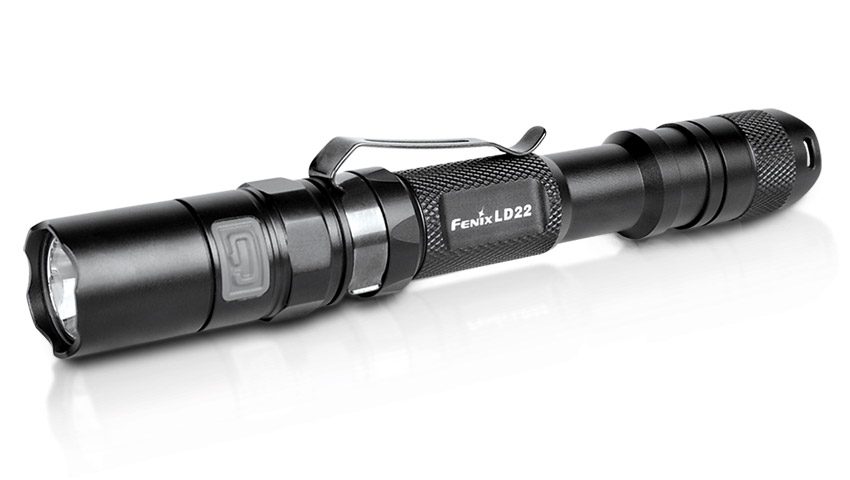
The Compact Fenix LD22


The Fenix LD22 is an excellent lighting tool that can serve multiple roles. This little powerhouse can be useful in an office drawer, glove compartment, camping bag, or tool belt. The versatility of the LD22 is really what makes it a great performer not just among compact lights, but among flashlights in general. Here are some highlights as to the specifications.

Size/Weight- Length is 6.14 inches (156mm). Weight is 2.1 oz (60gm) without batteries. I thought the length would exclude pocket carry for me, but I was wrong. It fits comfortably in the front pocket of cargo shorts and the light weight makes it hardly noticeable.

Power/Run Times- There are 4 power levels. This is what really makes the LD22 so versatile. Low (3 Lumens/110Hrs) The most common setting for me. A great camping setting to find your way around, can shine across a room at night without blinding yourself in the process. Excellent for tasks that are close (dropped coin, key, etc.) and situations that do not require far throw or brilliant light. The ability for a light to go into low modes is often underrated. A super bright light is not always needed for common tasks. Fenix got it right with this setting that provides excellent light volume vs. runtime. Mid (42 Lumens/15hrs) A great general purpose level. Great search mode. Perfect for most functions that most would use their archaic 2D cell junk lights for. But the LD22 will far outperform given its smooth even light beam. High (92 Lumens/6hrs) Very bright. Easily shines up a room, gives excellent visibility outdoors with a decent throw distance. Turbo (190 Lumens/2.5hrs) This is where the magic happens. Blinding light that is good for tactical as well as searching at a distance. It's amazing the level of light and throw it puts out on just a couple of AA batteries!! I am able to use rechargeable batteries. For this reason alone this light will likely pay for itself in battery savings over some of my other lights requiring expensive CR123 batteries. It also has a strobe function that I like a bit more than a typical strobing light. It alternates the speed roughly every 2 seconds. It seems to be more effective than single speed strobe modes. There is also an SOS function that is not much use to me but it is there if you need it.

User Interface- The Fenix LD22 has some improvements over its predecessor the LD20. A side switch just between the body and the lens allows you to toggle between the various lighting levels. One click moves you through the modes, while holding it down puts you in the Strobe/SOS mode. Very easy. It could be a challenging button to find with cold fingers or gloves however. Orienting the pocket clip to "point" to the switch helps your fingers find it. The rear push button switch is very solid and simply turns the light on and off. The light has a memory and will come on in the mode selected before it was turned off. My particular light has the switch extending just past the tail cap, meaning it is not freestanding. This was not a concern for me, because if I were to use it as a lantern, I would likely hang it instead.

Carry Methods- The Fenix LD22 comes with a decent (not great) nylon holster. It has a Velcro closure on the front, and a loop in the back fitting a 2 inch thick belt comfortably. I doubt this holster would hold up under heavy use but for the average owner it would be sufficient. Someone using this light professionally on a daily basis would be advised to look for an alternative. It also has a pocket clip that is reversible in order to carry bezel up or down. It is solid, and grips securely to a pocket. I was also able to place it off center on the brim of a typical baseball cap allowing hands free operation. Fenix also supplies a lanyard but it is rather thin although stylish does not appear to be very strong. A solution to this might be to get a small ring attached to the light in order to connect to a more substantial lanyard made of 550 cord or other material.

Attachment Options- The Fenix LD22 has some excellent options available. A well constructed bike mount Fenix Bike Mount (Fits lights with 18-28mm Diameter) is made that will allow you to have a very capable bike light that is removable to use for other purposes. A filter kit that has an orange traffic wand, diffuser tip, diffuser lens, and red filter have been invaluable additions to this light. The filter kit requires a separate review however.

//EE
(C) Copyright